
Dog Daycare for Socialization: Is It Right?
- 6 days ago
- 6 min read
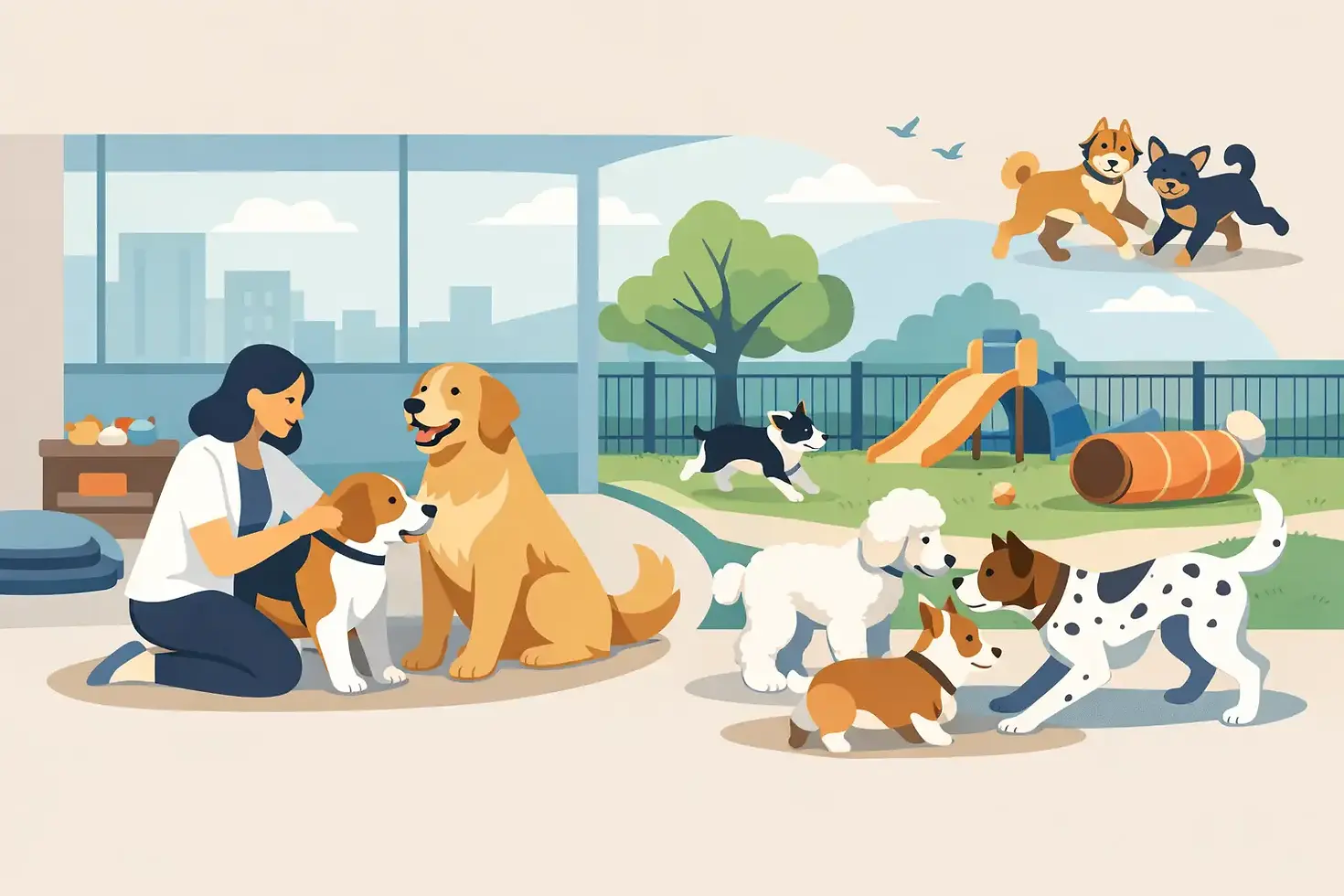
Some dogs light up the second they see another dog. Others freeze, bark, or try to hide behind your legs. Most fall somewhere in the middle, which is exactly why dog daycare for socialization gets so much attention from pet owners. The idea sounds simple - let dogs spend time together and they will become more confident, friendly, and well-adjusted. In practice, good socialization is a lot more thoughtful than just putting dogs in the same space.
For many North Texas families, daycare can be a helpful part of a dog’s routine. It gives dogs a chance to interact, move their bodies, and practice being around other dogs and people outside the home. But not every dog is ready for group play, and not every daycare environment supports healthy social development. The difference comes down to structure, supervision, and whether the staff understands canine behavior well enough to know when a dog needs play, a break, or a different plan.
What dog daycare for socialization actually means
Socialization is often misunderstood. It does not simply mean making your dog play with as many dogs as possible. Real socialization means helping a dog feel safe and calm in different situations, around different people, dogs, sounds, and routines. The goal is not to create a dog who wants to greet everyone. The goal is to create a dog who can handle the world with confidence.
That is where daycare can help. In a well-run setting, dogs learn how to read other dogs, respond to social cues, and settle after excitement. They get practice with short greetings, shared space, supervised play, and transitions throughout the day. For younger dogs, this can support healthy development. For adult dogs, it can maintain social skills and reduce boredom that sometimes turns into nuisance behavior at home.
Still, daycare is not a magic fix for fear, reactivity, or deeper behavior issues. If a dog is already overwhelmed by other dogs, placing them in a busy group too soon can make things worse instead of better.
Which dogs benefit most from daycare socialization
Some dogs are natural candidates for daycare. Friendly puppies who have started their vaccines, adolescent dogs with lots of energy, and adult dogs who enjoy balanced play often do well in a structured environment. Dogs from busy households also tend to benefit from learning how to settle around activity instead of staying overstimulated all day.
Working professionals often see the biggest change. A dog who spends long hours alone may come home from daycare more relaxed, more mentally satisfied, and less likely to turn that pent-up energy into chewing, barking, or bouncing off the furniture at 7 p.m. Families with children also appreciate when a dog gets regular exercise and social time in a setting designed around safety and supervision.
On the other hand, some dogs need a slower path. Senior dogs may prefer calm companionship over all-day play. Shy dogs may need smaller groups and careful introductions. Dogs with a history of guarding, bullying, or panic around other dogs may need training first, or a daycare plan with more one-on-one care and less group time.
Signs a daycare is helping your dog socialize well
Healthy socialization is usually easy to spot once you know what to watch for. Your dog should come home pleasantly tired, not frantic or shut down. Over time, you may notice better body language on walks, calmer greetings, and fewer signs of frustration around other dogs.
A dog who is benefiting from daycare often shows more flexibility. They recover faster from excitement. They can engage and then disengage. They are not constantly trying to control every interaction. That kind of emotional balance matters more than whether your dog spends the whole day wrestling with a new best friend.
You may also notice better manners in daily life. Dogs who get the right kind of social exposure often improve at waiting, sharing space, and responding to direction even when there is stimulation around them. That is especially true when daycare staff understand that socialization includes rest, boundaries, and redirection, not just play.
When dog daycare for socialization is not the best fit
There are times when daycare should not be the first answer. If your dog lunges on leash, panics in new settings, or gets overwhelmed quickly, jumping into group daycare can put too much pressure on them. Dogs do not build confidence by being flooded with stress. They build confidence through manageable experiences that help them feel successful.
The same applies to puppies in sensitive developmental stages. Puppies benefit from socialization, but they also need protection from rough play, intimidation, and overstimulation. One bad experience can leave a lasting impression. A good facility knows how to separate by temperament, energy level, size, and play style, instead of assuming every puppy should just "learn to be a dog" in a large group.
Some owners also use daycare when the real issue is a training need. A dog who struggles with impulse control, leash manners, or attention around distractions may absolutely benefit from social exposure, but daycare alone will not teach those skills. In those cases, daycare works best when it complements training rather than replacing it.
What to look for in a socialization-focused daycare
Not all daycare programs are built the same, and this is where pet owners need to be selective. A good program starts with safety. Dogs should be screened for temperament and introduced thoughtfully. Play groups should be supervised by people who can read canine body language, interrupt bad interactions early, and prevent high-energy play from tipping into conflict.
The environment matters too. Clean indoor areas, secure play yards, climate-controlled spaces, and clear routines help dogs stay comfortable and regulated. In North Texas heat, that climate control is not a luxury. It directly affects a dog’s stress level, hydration, and ability to enjoy the day safely.
Ask how dogs are grouped, how often they rest, and what happens if a dog is not a good fit for open play. The best answer is not that every dog joins the pack. The best answer is that the staff adjusts the day to the dog. Sometimes that means smaller groups. Sometimes it means breaks, enrichment, one-on-one attention, or a more gradual introduction process.
Transparency matters just as much as features. Owners should feel clear on pricing, supervision, and what the day actually looks like. Trust grows when the facility is straightforward about procedures, behavior expectations, and how they handle everything from medications to quiet time.
How to know if your dog is ready
Readiness is less about age and more about emotional stability. A dog who can recover from new experiences, show curiosity without panic, and tolerate short interactions without escalating is often a good candidate. They do not need to be perfect. They do need to be able to cope.
A trial day is often the best starting point. It gives staff a chance to observe your dog’s play style, energy level, and comfort in a new environment. It also gives you useful feedback. If your dog needs a slower pace, that is not a failure. It is valuable information that can help you choose the right mix of daycare, training, and home routine.
If you are unsure, talk with professionals who work with dogs every day and can evaluate more than surface-level behavior. A family-owned operation with deep hands-on experience often sees the difference between a dog who is simply excited and one who is quietly struggling. That kind of judgment matters because socialization should build trust, not test it.
The best results come from balance
Daycare can do a lot, but it works best as one part of a bigger picture. Dogs still need rest at home, clear expectations, and guidance from their owners. Social skills improve faster when dogs have consistency across the board - structure at daycare, routine at home, and training support when needed.
That is one reason many pet owners prefer a provider that understands the full range of canine care. At CMC Dog Training, that same practical approach shows up across daycare, boarding, and training. Dogs are not treated like they all need the exact same day. They are handled as individuals, which is how real progress happens.
If you are considering daycare mainly for socialization, think less about whether your dog will make friends and more about whether they will learn to feel safe, appropriate, and comfortable around the world around them. That is the kind of confidence that lasts long after pickup time.

Comments